


What Is Infrastructure Observability and Why Does It Matter?
Modern businesses depend on increasingly complex technology environments.
Applications may run across cloud platforms, physical servers, networks, databases, data centers, and connected devices. When everything works correctly, users may never think about the infrastructure supporting these services.
But when something goes wrong, finding the cause can become difficult.
A slow application may be caused by a network issue. A network problem may be connected to infrastructure capacity. A database may appear slow because another application is consuming excessive resources.
This complexity creates a need for better visibility.
Infrastructure observability helps organizations understand what is happening across their technology environment and, more importantly, helps technical teams investigate why problems are occurring.
Organizations can use professional IT consultancy to assess their infrastructure and develop a technology environment that supports better visibility.
What Is Infrastructure Observability?
Infrastructure observability is the ability to understand the internal condition and behavior of IT infrastructure by analyzing information generated by systems.
This information can come from:
- Servers
- Networks
- Applications
- Databases
- Cloud platforms
- Storage systems
- Security systems
- Devices
- Data centers
Observability brings information from these different components together so technical teams can develop a clearer picture of system behavior.
It can help answer questions such as:
What happened?
Where did the problem begin?
Which systems were affected?
Why did performance change?
What happened immediately before the issue?
These questions become increasingly important as technology environments become more interconnected.
Observability vs. Traditional Monitoring
Monitoring and observability are closely related, but they are not exactly the same.
Traditional monitoring generally focuses on known conditions.
For example, an organization may monitor:
- CPU usage
- Memory
- Network traffic
- Server availability
- Storage capacity
- Application response time
If a threshold is exceeded, an alert may be generated.
Observability goes deeper by helping teams investigate relationships between different events and understand the possible causes behind an issue.
Monitoring can tell you that something is wrong.
Observability can help you investigate why it is wrong.
Why Infrastructure Observability Matters
Modern IT environments have many interconnected components.
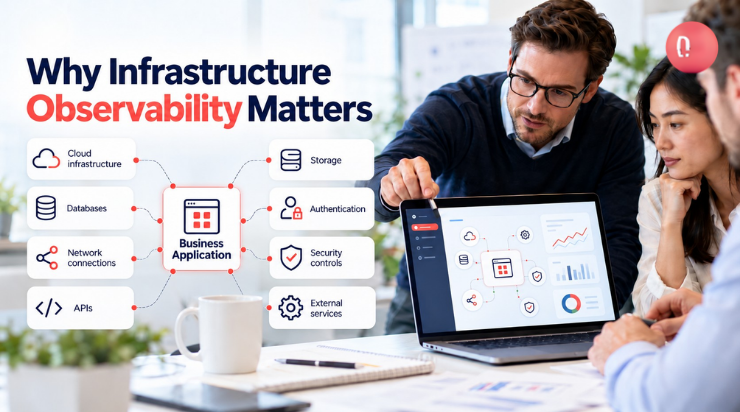
A single business application may depend on:
- Cloud infrastructure
- Databases
- Network connections
- APIs
- Storage
- Authentication
- Security controls
- External services
If one component experiences a problem, other systems may also be affected.
Without sufficient visibility, technical teams may spend significant time checking individual systems manually.
Observability can help reduce this uncertainty by bringing relevant information together.
Improve Problem Detection
One benefit of better infrastructure visibility is faster identification of unusual behavior.
For example, a sudden increase in network traffic may indicate a performance problem.
A gradual increase in resource usage may indicate that infrastructure capacity needs to be reviewed.
Repeated application errors may indicate a problem with an underlying service.
By collecting and analyzing infrastructure information, teams can identify patterns before they become major disruptions.
Organizations can complement this approach with managed services for ongoing technology operations and support.
Understand the Root Cause
One of the biggest challenges in IT operations is finding the root cause of a problem.
Imagine a customer-facing application becomes slow.
The application itself may appear healthy.
However, deeper investigation may show that:
- Network latency increased.
- This affected application requests.
- Requests began taking longer.
- Users experienced slow performance.
Without visibility across multiple layers, the team might spend time investigating the wrong component.
Infrastructure observability can help connect these events and provide more useful context.
Observability Across Cloud Environments
Cloud environments can make infrastructure more flexible, but they can also increase complexity.
Businesses may use multiple cloud services, virtual machines, containers, databases, storage services, and applications.
Understanding how these components interact can become challenging.
Observability can provide greater visibility across cloud environments.
Organizations planning cloud infrastructure can also explore DLAN’s cloud services when developing scalable technology environments.
Network Observability
Networks are a critical part of modern infrastructure.
Performance problems can originate from connectivity, routing, capacity, configuration, or other network conditions.
Network observability can help teams understand traffic patterns, performance changes, and connectivity issues.
This is particularly important for organizations operating across multiple locations.
DLAN’s telecommunications services support organizations with telecommunications infrastructure and connectivity requirements.
Data Centers Need Visibility Too
Data centers contain numerous interconnected systems.
These may include:
- Servers
- Storage
- Power systems
- Cooling
- Network equipment
- Security infrastructure
- Monitoring systems
Infrastructure visibility can help teams understand the performance and condition of these environments.
Organizations planning or improving large infrastructure environments can explore data center consultancy as part of their broader technology strategy.
Observability and Cybersecurity
Infrastructure observability also has an important relationship with security.
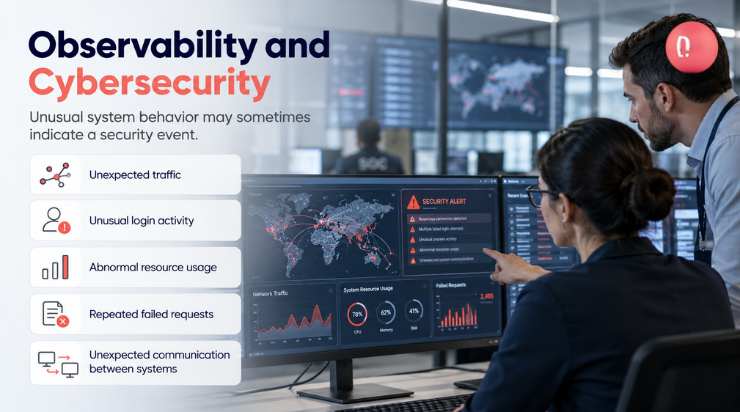
Unusual system behavior may sometimes indicate a security event.
For example:
- Unexpected traffic
- Unusual login activity
- Abnormal resource usage
- Repeated failed requests
- Unexpected communication between systems
These signals can provide useful context for security teams.
Observability should not replace dedicated security tools, but it can contribute to a broader security picture.
Businesses can strengthen this area through cybersecurity services.
The Importance of Good Data
Observability depends on useful information.
If data is incomplete, inconsistent, or difficult to access, technical teams may struggle to understand what is happening.
Organizations should consider:
- What information is collected
- Where it is stored
- How long it is retained
- Who can access it
- How systems are connected
- How alerts are generated
- How teams respond to incidents
This makes observability both a technology and process challenge.
Use Observability to Improve Capacity Planning
Infrastructure observability can also support long-term planning.
Organizations can analyze historical information to understand how infrastructure usage changes over time.
For example, resource usage may increase during:
- Business growth
- Seasonal demand
- Product launches
- New employee onboarding
- New location deployments
- Major campaigns
This information can help technical teams plan capacity before resources become constrained.
Observability Supports Proactive IT Operations
Traditional IT operations can sometimes become reactive.
A problem occurs.
The team receives an alert.
Employees investigate.
The issue is fixed.
Observability can support a more proactive approach by helping teams identify trends and investigate unusual behavior earlier.
For example, if storage usage has increased steadily for several months, the organization can address capacity before storage becomes a critical problem.
This can help reduce unexpected interruptions.
Observability in Different Industries
Infrastructure requirements differ between industries.
Healthcare organizations may need reliable technology environments for connected systems and digital healthcare services. DLAN provides dedicated healthcare technology solutions.
Financial institutions may operate systems that require strong reliability, security, and performance. DLAN also provides technology solutions for the banking sector.
Educational organizations can use connected technology across campuses, classrooms, networks, and learning systems through education solutions.
In each case, infrastructure visibility can help technical teams understand the systems supporting critical operations.
Observability and Enterprise Technology
Large organizations often have infrastructure distributed across multiple locations and technology environments.
This can include:
- Data centers
- Cloud environments
- Branch offices
- Corporate networks
- Applications
- Connected devices
A unified approach to infrastructure visibility can help technology teams understand these environments more effectively.
DLAN’s enterprise solutions cover technology requirements for organizations operating at larger scale.
Build an Observability Strategy
Infrastructure observability should not simply mean collecting as much data as possible.
Businesses should first identify what they need to understand.
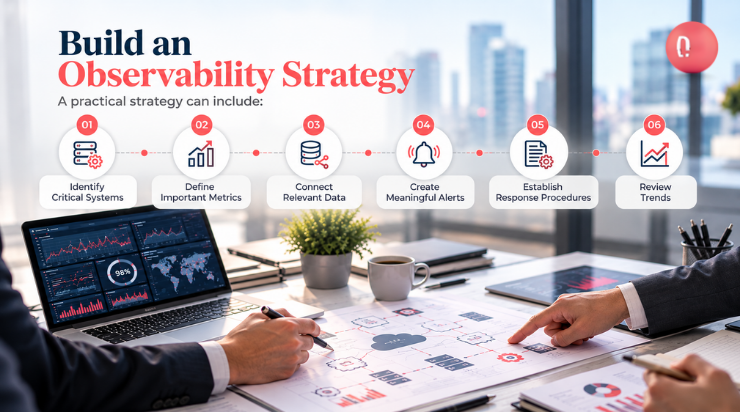
A practical strategy can include:
1. Identify Critical Systems
Determine which infrastructure components are essential to business operations.
2. Define Important Metrics
Decide which performance and operational information matters.
3. Connect Relevant Data
Bring useful information together across infrastructure layers.
4. Create Meaningful Alerts
Avoid overwhelming technical teams with unnecessary notifications.
5. Establish Response Procedures
Define what teams should do when important issues are detected.
6. Review Trends
Use historical information to identify recurring problems and future capacity requirements.
This creates a more structured approach to infrastructure visibility.
Infrastructure Observability and Digital Transformation
Digital transformation often adds more technology to an organization.
New applications, cloud platforms, connected devices, and automated processes can improve operations, but they can also increase technical complexity.
That makes visibility increasingly important.
Observability can become part of a wider digital transformation strategy by helping businesses understand the technology environments supporting their new digital capabilities.
DLAN’s software solutions can also support organizations developing and integrating technology around their operational requirements.
Governance and Operational Control
Infrastructure visibility also supports better governance.
Organizations need to understand what systems they operate, how those systems interact, and where risks may exist.
This information can support technology reviews, risk management, compliance activities, and operational planning.
Businesses can explore DLAN’s Governance, Risk & Compliance services as part of a wider technology governance strategy.
Final Thoughts
Infrastructure observability gives organizations greater visibility into complex technology environments.
While traditional monitoring can identify known performance conditions, observability can provide deeper context for investigating system behavior and understanding relationships between different infrastructure components.
As businesses adopt cloud platforms, connected applications, distributed infrastructure, and increasingly digital operations, understanding what is happening across the technology environment becomes more important.
A strong observability strategy can help organizations detect issues earlier, investigate problems more effectively, plan capacity, and build more reliable digital infrastructure.